Small Entryway, Big Difference: A Place for Everything You Bring Home
A practical guide to shoe storage, hooks, and landing zones in a small entryway.
ChoiceLark may earn a commission from qualifying purchases through affiliate links, where used. How our links work.
In this guide
The front door opens onto shoes, a grocery bag, and yesterday’s mail. There is technically a console table nearby, but its surface is already full. A small entryway does not need more places to put everything. It needs a few obvious places for the things that arrive every day.
Start with the journey from the door into the home. Where do you take off shoes? Which hand is carrying the bag? Where do wet coats end up? Answer those questions before choosing furniture. The right setup can be modest: a shallow shoe rack, properly installed hooks, and a small tray that stays within reach.
Measure the space while it is in use
Measure with the door fully open, not just closed. Include baseboards, heating equipment, light switches, and nearby cupboard doors. A cabinet that fits along the wall may still block the route when its drawers or doors open.
Mark the proposed footprint on the floor with removable tape. Walk past it carrying a laundry basket or shopping bag. This makes the depth of a supposedly slim unit much easier to judge than a product photograph. Leave the entrance and required escape routes unobstructed.
Wall storage can free floor area, but it creates its own requirements. Check wall type, mounting instructions, maximum load, and whether you have permission to drill. An adhesive hook is not interchangeable with a securely fixed coat rack. Buy the fixing method for the surface and intended load.
Give everyday shoes the best space
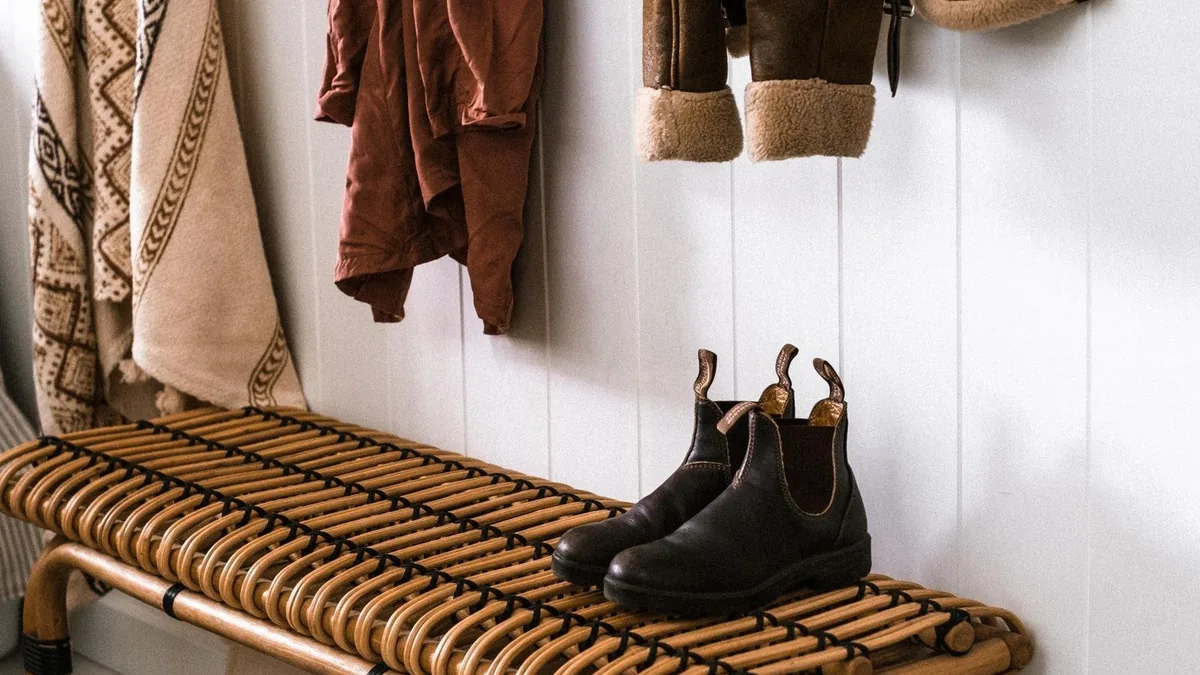
An entryway usually works better when it stores current shoes rather than the entire household collection. Count the pairs worn regularly, include the largest size, and note whether boots need extra height. A rack designed around small shoes may waste your time every morning if your actual footwear must be balanced sideways.
Open shelves make shoes easy to see and allow you to notice dirt or moisture. Closed cabinets create a calmer appearance but need enough internal room and appropriate care for damp footwear. Tilt-out designs can be shallow, yet their useful capacity depends heavily on shoe size and shape.
If you sit to put shoes on, check the seat’s stated load and dimensions. Do not assume the top of a storage unit is a bench because it looks like one. A separate stable stool may be more useful than a cramped combination product.
| Recurring problem | Storage worth considering | Check before buying |
|---|---|---|
| Shoes spread across the floor | Low open rack | Largest shoe length and shelf spacing |
| Coats on dining chairs | Wall-mounted hook rail | Wall fixings and load rating |
| Keys disappear under mail | Small tray or key shelf | Reach from the door and easy visibility |
| Tight passage beside the door | Shallow wall storage | Open-door clearance and mounting needs |
Make a landing zone small on purpose
A broad tabletop invites a broad collection. A small tray encourages a simpler rule: keys, wallet, and the item needed tomorrow morning. Put mail somewhere separate so it does not bury the essentials. A vertical paper holder may suit a household that sorts correspondence daily; it will not create that habit by itself.
Give each person a reachable spot. In a shared home, several modest hooks can work better than one overloaded coat stand. A child-height hook may be useful when installed appropriately, while rarely used bags can live elsewhere. The entrance should support daily movement, not become the final home for every possession.
For dog owners, a washable pouch or basket can keep walking supplies together. Our dog-walking essentials guide can help narrow that collection to what you actually use.
Buy materials for the mess you expect
Rain, mud, and grocery spills make this a working space. Choose surfaces you can wipe and a mat that suits the flooring beneath it. Check cleaning instructions rather than assuming every natural fiber or painted finish will tolerate wet items.
A tray for damp shoes should fit the available floor space without creating another trip point. A tall umbrella holder may be convenient in a corner and awkward beside an opening door. Think about the fully loaded arrangement, not just the empty furniture.
Furniture stability matters, especially when a narrow cabinet has opening doors or drawers. The CPSC’s Anchor It campaign advises securing furniture according to the manufacturer’s instructions. Do not omit required restraints to preserve the look of the wall. If a suitable installation is not possible, select a different design.
What to skip
Skip a full hall tree when all you need is a few hooks. Skip storage baskets that obscure everything you need to find quickly. Skip a matching furniture set if one piece reduces the useful width of the hallway. Buying fewer pieces also makes it easier to clean underneath and change the layout later.
Before checkout, compare internal measurements and assembly requirements, not just external dimensions. Check whether wall hardware is included and whether the listed fixings suit your home. Keep the installation manual with the product details so future adjustments are informed.
Everyday entryway questions
Is a closed shoe cabinet better than an open rack?
Choose closed storage if visual calm is your priority and the shoes fit properly. Choose an open rack if quick access, flexibility, and visible cleaning are more important. Neither replaces a plan for wet footwear.
What if I cannot drill into the wall?
Look for a stable freestanding solution that meets its installation requirements. Do not choose furniture that requires anchoring and simply leave it unsecured. Confirm any removable mounting product is suitable for the intended surface and load.
How do I stop the area filling up again?
Limit it to current daily items and give occasional-use belongings another home. A regular five-minute reset is more effective than adding another basket whenever the first one fills.
A good entrance is easy to use when you arrive with full hands. Build around that moment, and the furniture decisions become much clearer.
Sources and further reading
Source information checked November 10, 2026. Layout suggestions are editorial guidance; always follow the furniture and fixing manufacturers’ instructions.
TAKE THE NEXT STEP
Compare the options that fit your routine
Use the criteria in this guide to narrow your shortlist. Check the exact model, dimensions, current price, seller, and return policy before you buy.
Browse options on Amazon ↗This link opens a retailer search. Results and availability can change.