Everyday Dog-Walking Gear Worth Getting Right
A practical guide to leashes, harness fit, cleanup supplies, and walks after dark.
ChoiceLark may earn a commission from qualifying purchases through affiliate links, where used. How our links work.
In this guide
The walk begins before the front door opens. Someone searches for waste bags, the leash is tangled around a coat, and the harness needs adjusting again. The most useful dog-walking gear should make that ordinary departure easier while keeping the dog secure and comfortable.
Choosing equipment involves the dog, the handler, and the route. Size labels and attractive matching sets cannot answer every fit or behavior question. The guidance here draws on published American Kennel Club information and practical buying criteria; it does not replace advice from a veterinarian or qualified trainer when a dog’s needs require it.
Fit comes before matching colors
Measure according to the exact product’s instructions rather than ordering only by breed or weight. Body shapes vary, and brands can define sizes differently. Check the adjustment range and whether the dog is close to one end of it.
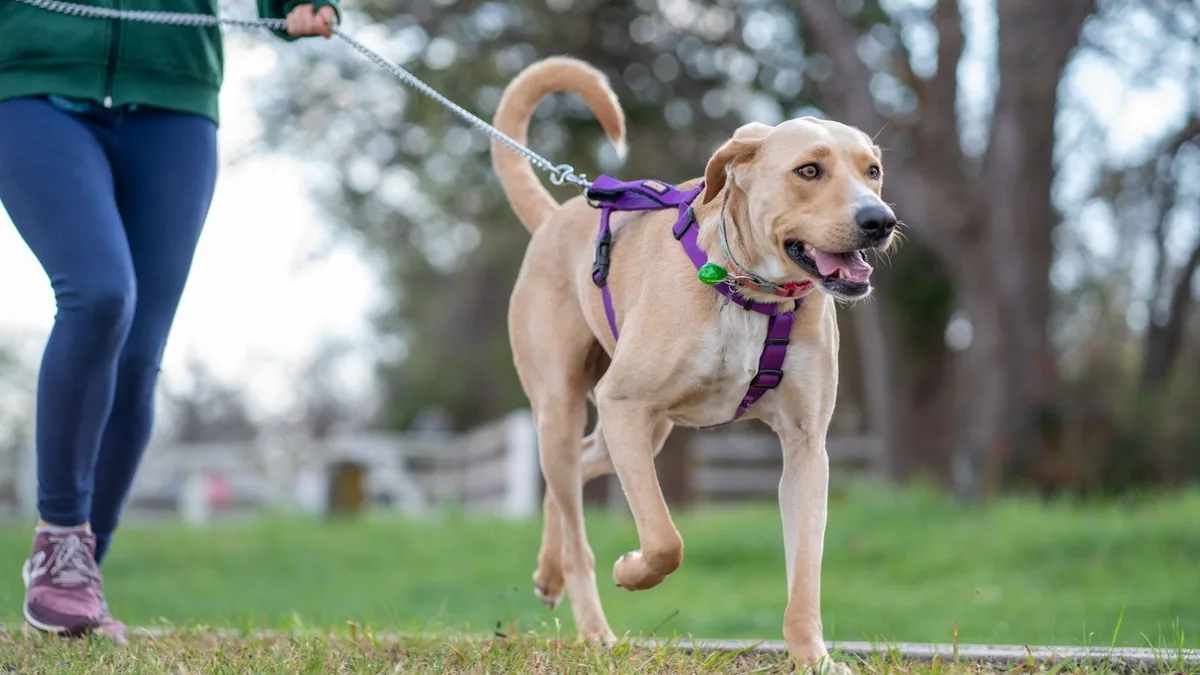
AKC’s harness guidance highlights neck and chest measurements, appropriate adjustment, and watching the dog move while checking fit. A harness should not be assumed secure just because its buckles close. Follow the fitting checks for the exact design and seek help if you cannot establish a suitable fit.
Think about putting it on as well. A design that requires an uncomfortable process for your dog may not suit your daily routine. If possible, try the harness in a suitable setting before committing, while respecting the retailer’s return conditions.
Choose a leash for the route you walk
A neighborhood sidewalk, a crowded station approach, and an open training area are different environments. A fixed-length leash can be straightforward for ordinary walks. Other designs have specific uses, but added length or an elaborate mechanism does not automatically improve control.
AKC advises considering the dog’s size and training, the planned activity, and the comfort of dog and handler. Compare the clip, stitching, webbing, and handle rather than treating a decorative pattern as the deciding feature.
| Item | A useful everyday priority | Check carefully |
|---|---|---|
| Collar or harness | Appropriate fit and intended use | Adjustment, movement, security, and condition |
| Fixed-length leash | A comfortable connection on regular routes | Clip size, handling, construction, and local rules |
| Reflective accessories | Better visibility in suitable light | Placement and what the material actually does |
| Waste-bag holder | Bags available when needed | Refilling and access with the leash in hand |
| Portable bowl | Useful water access on appropriate outings | Cleaning, size, and the dog’s willingness to use it |
Inspect the details in your hand
Hold the leash as you would outside. Is the loop comfortable with gloves? Can you operate the clip without fumbling? Does the hardware suit the dog’s size and the attachment point on the harness or collar?
Avoid assuming that heavier is always stronger or better. Oversized hardware can be cumbersome for a small dog, while an unsuitable lightweight clip may be a poor match for another. Read the stated intended use and any load or sizing information, then ask the manufacturer when the specifications are unclear.
Check gear regularly for damage and replace it according to its condition and manufacturer guidance. A worn strap should not remain in service simply because the rest of a matching set still looks new.
Plan for the hours you actually go out
Many daily walks happen before work or after dinner. Consider how visible you and the dog are on that specific route, including crossings and dim areas. Reflective details can help when illuminated, but should not be treated as a guarantee that other people have seen you.
If choosing a wearable light, check attachment security, weather guidance, controls, and power requirements. Make sure it does not create an uncomfortable position or interfere with the rest of the gear. A light is an addition to attentive walking, not a replacement for it.
Choose clothing and accessories appropriate to conditions and the individual dog. Do not buy boots, coats, or cooling products solely because they appear in a seasonal display. For unusual needs or concerns about weather suitability, get advice from your veterinarian.
Build a small exit station
Give the walking equipment a defined place near the door. Keep refills for waste bags where you can see them, and separate clean gear from damp or muddy items. A washable tray, a few hooks, or a small basket may solve the problem without specialized furniture.
Keep treats or other supplies stored appropriately rather than leaving open containers near household traffic. If you carry a small pouch, choose one you can operate while managing the dog; too many dangling accessories can make a short walk harder.
Our guide to small-entryway organization can help integrate that station with shoes, keys, and the rest of everyday life.
Questions before ordering
Will a different harness stop pulling?
Equipment can affect how a walk feels, but it is not a substitute for appropriate training. If pulling, lunging, fear, or escape behavior is a concern, seek qualified help rather than relying on a product’s strongest claim.
Should I buy a retractable leash?
Consider the dog, environment, handling requirements, local rules, and instructions for that specific design. A standard leash is often simpler for crowded everyday routes. More available distance is not automatically useful where space is limited.
Is one setup suitable for walking and car travel?
Do not assume so. A walking harness is not automatically designed or tested as a vehicle restraint. Choose travel equipment for that purpose and follow the relevant vehicle and product instructions.
Sources and further reading
Sources checked November 10, 2026. Product choices should reflect the individual dog’s needs and appropriate professional guidance.
TAKE THE NEXT STEP
Compare the options that fit your routine
Use the criteria in this guide to narrow your shortlist. Check the exact model, dimensions, current price, seller, and return policy before you buy.
Browse options on Amazon ↗This link opens a retailer search. Results and availability can change.